Teleprompter Demo: Turkish Accent
An earthquake engineering talk with terms such as alluvial deposits and shear wave velocity. Watch the bright word through them, a story from Adapazari, a mid-sentence correction and a long pause.
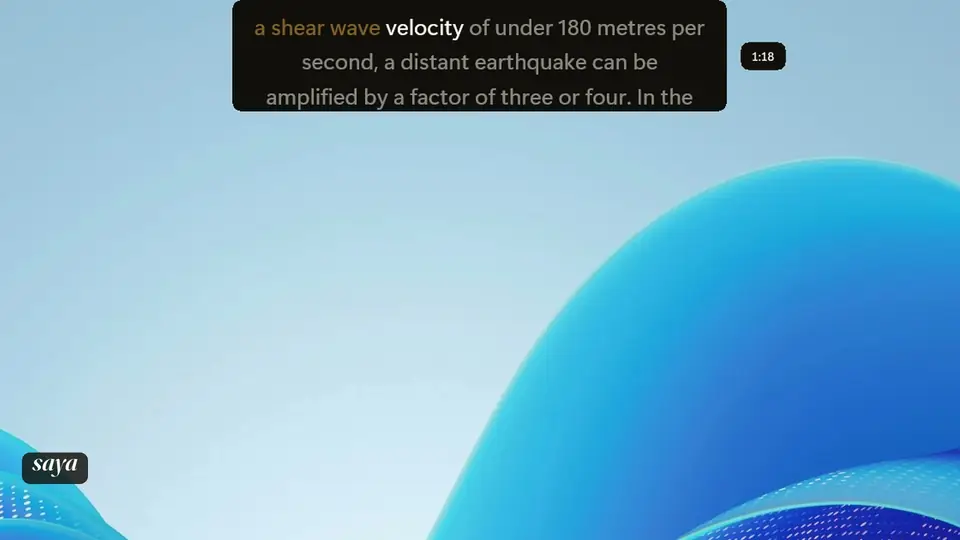
“What the Soil Remembers”, a scripted demo talk on SAYA for Windows on a remote test server, in one take from start to finish, with opening and closing titles added. The voice reached SAYA through a virtual audio cable, not a room microphone. The accent name is the voice library's label.
Moments to watch
Select a time to play from there. A “…” marks where a quote starts or stops mid-sentence.
A pause0:28
I remember the sound before I remember the shaking. [exhales] Excuse me.
Word by word1:21
On soft alluvial deposits, with a shear wave uh, velocity of under one hundred and eighty metres per second, a distant …
A slip and a fix1:38
… in one district, and in the next, no, less than half of that barely two kilometres …
Off script2:18
… has a mortgage on one. I visited one like this in Adapazari. The owner, an old man, he asked me, teacher, can I just push it back? He was serious. He brought me tea, and he was serious. What can you say to this man? Now the …
Transcript
The words of the talk as the voice says them, including its asides and slips. The text on screen is the script. While the film plays, the current paragraph is marked.
August 1999
0:12Thank you, and good afternoon. I was a second-year civil engineering student in Istanbul on seventeen August nineteen ninety-nine, when the North Anatolian Fault ruptured along roughly one hundred and fifty uh, kilometres near Izmit, at three oh two in the morning.
0:28I remember the sound before I remember the shaking.
0:35[exhales] Excuse me. Every time I say this, even now, after so many years, I check the ceiling. My students laugh at me. They think it is a joke, but I really do it, in every room, also in this room.
Not a natural disaster
0:51Twenty-seven years later, I still design buildings for a living, and I want to use my twenty minutes to convince you that most of what we call a natural disaster is, in fact, a construction problem with a very long fuse.
The ground
1:05Let me start with the ground, because everything starts there. A building does not respond, A building does not respond to a magnitude. It responds to an acceleration time history at its own foundation, passed through every metre of soil beneath it.
1:21On soft alluvial deposits, with a shear wave uh, velocity of under one hundred and eighty metres per second, a distant earthquake can be amplified by a factor of three or four. In the Marmara region, we have seen peak ground accelerations of zero point four g in one district, and in the next, no, less than half of that barely two kilometres away. Same earthquake, same minute, completely different demand on the structure.
Liquefaction
1:50Then there is liquefaction. When saturated, loose sand is shaken quickly, the pore water pressure rises until the grains stop touching each other, and for some twenty or thirty seconds the ground behaves less like a foundation and more like a very thick soup. [laughs]
2:08Buildings do not collapse in that case. They tilt, sink, and sit there undamaged and completely useless, which is a strange thing to explain to a family that still has a mortgage on one. I visited one like this in Adapazari. The owner, an old man, he asked me, teacher, can I just push it back? He was serious. He brought me tea, and he was serious. What can you say to this man?
The structure
2:34Now the structure. A reinforced concrete frame survives by bending in the right places. We want plastic hinges to form in the beams, not the columns, and the requirement is captured in a single figure: the strong-column, weak-beam ratio, which the current code sets at one point two.
2:53We need closely spaced stirrups, bent at one hundred and thirty-five degrees, with ribbed steel of at least S four twenty grade. None of this is hidden knowledge. It has been in the national code, in one form or another, since nineteen seventy-five, and it was tightened significantly in nineteen ninety-eight and again in twenty eighteen. [sighs]
Why buildings still fall
3:16So why do they still fall? Because a code, in the end, is only paper.
3:21When we surveyed twelve hundred and forty damaged buildings, um, more than sixty percent had concrete below the strength written on the drawings, forty percent had smooth bars where ribbed bars were specified, and in many cases a ground-floor column had been cut away to make room for a shop window. A column removed by a shopkeeper in two thousand and four is a decision that arrives, with interest, twenty years later.
3:49And I do not blame only this man, the shopkeeper. He needs a window, he wants to sell shoes. Who signed the paper? Who looked at it and said, yes, no problem? This is my question, and I am still asking it.
What to do with the money
4:04So what would, what can... What would I do with your money? First, base isolation for every hospital and emergency centre, because lead-rubber bearings can reduce the floor accelerations by seventy percent or more, and a hospital that keeps working is worth far more than its concrete.
4:22Second, targeted retrofitting of the soft-storey apartment blocks, using steel jacketing or carbon fibre wrapping at perhaps fifteen percent of the cost of rebuilding. Third, independent inspection, paid for by the state, with the results printed on the door of the building where everybody can read them.
The next earthquake
4:42The next large earthquake on this fault is not a question of whether. The estimates I trust put the probability of a magnitude seven event below the Sea of Marmara at about forty-seven percent within thirty years.
4:55We know the fault. We know the soil. We know the reinforcement details.
5:01What remains is the courage to enforce them on a Tuesday afternoon, when nothing is shaking and nobody is watching. Thank you.
Talks with slides
 British accent, with slides“What Twelve Thousand Oysters Did” · 5:04
 American accent, with slides“Two Stores, Thirty Days” · 4:53
 South African accent, with slides“Clean Water In, Honest Numbers Out” · 5:34
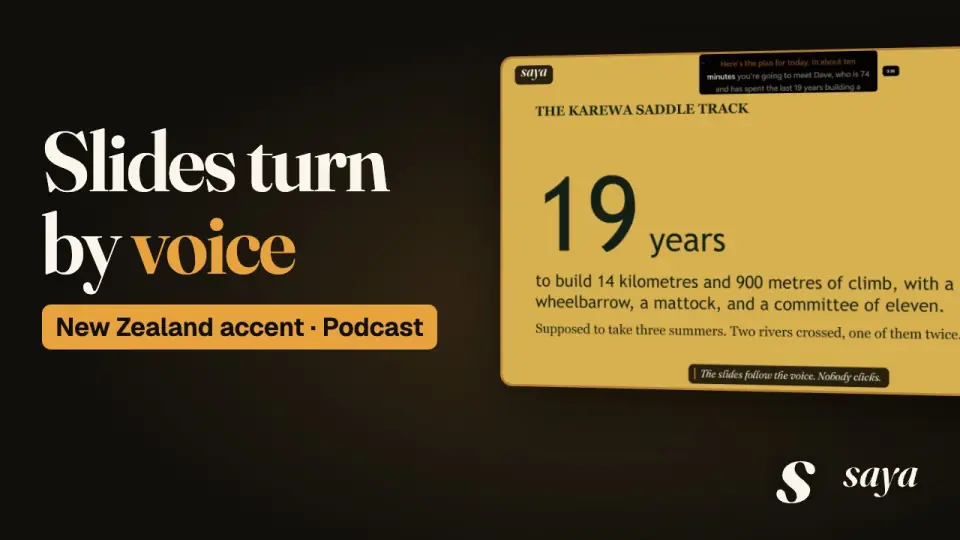 New Zealand accent, with slides“It Was There the Whole Time” · 4:48
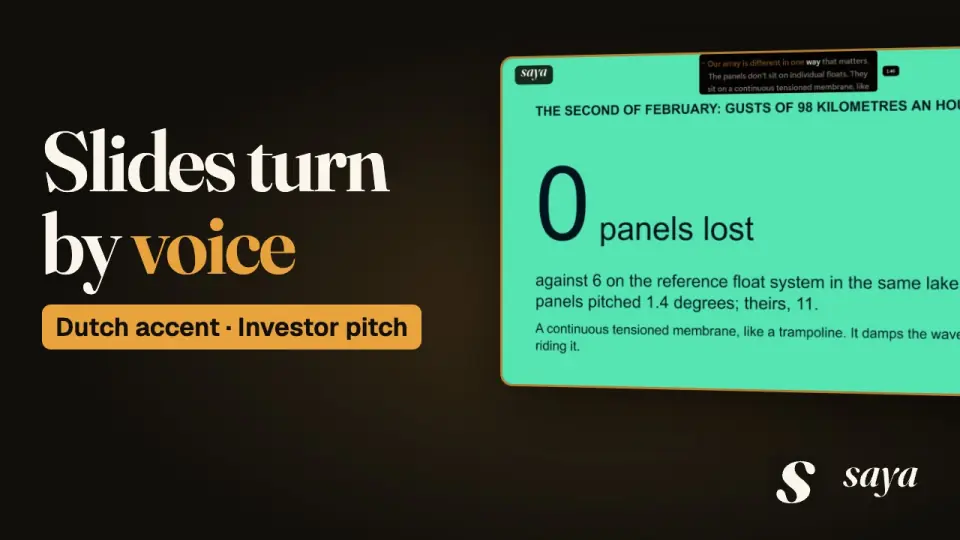 Dutch accent, with slides“A Lake That Did Nothing for Forty Years” · 5:08
 Russian accent, with slides“People with Old Telescopes” · 5:08