Slides That Follow Your Voice: Malaysian Accent Documentary Narration
At the mouth of the Lembah estuary, on a mudflat that was a prawn farm 12 years ago, he tells how the estuary lost 1,400 hectares of mangrove to ponds in the 1990s. SAYA shows the slides full screen and turns them as the talk reaches them. Along the way the voice goes off script, corrects itself, restarts a sentence, pauses and skips a line.
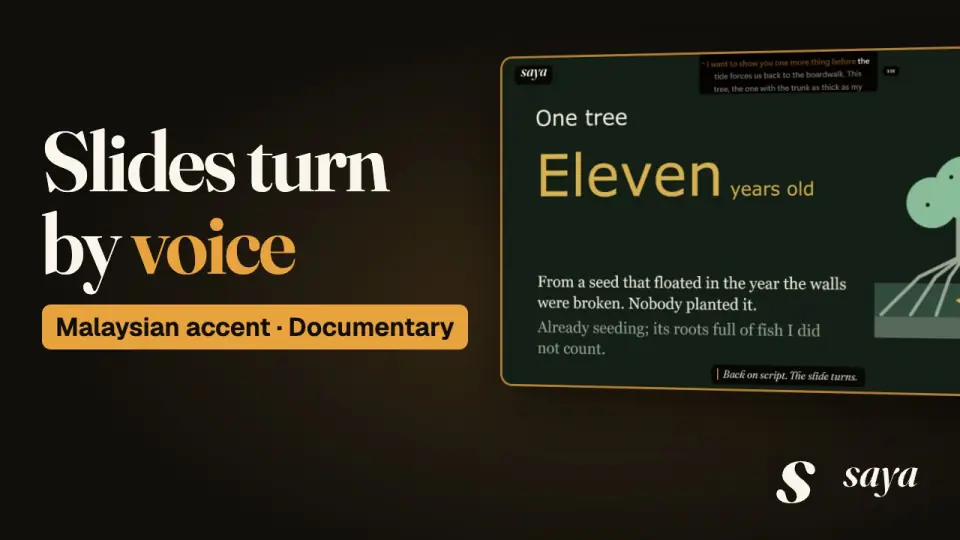
“A Forest Allowed to Remember”, a scripted demo talk with slides on SAYA for Windows on a remote test server, in one take from start to finish, with opening and closing titles added. SAYA turns the slides as the talk reaches them. The voice reached SAYA through a virtual audio cable, not a room microphone. The accent name is the voice library's label.
Moments to watch
Select a time to play from there. A “…” marks where a quote starts or stops mid-sentence.
Off script0:59
The crew asked me not to do that again. There is a crab watching me, you see, with the face of something that has seen a lot of presenters lick a lot of leaves, and is not impressed. Fair. Okay.
A slip and a fix1:47
The ponds were productive for about five, six years each. Then …
A pause2:44
The forest planted itself, The forest planted itself. Seeds floated in on the water, lodged in the right places, at the right height, and grew.
Said another way2:58
More than eighty percent of these volunteers, which is what the ecologists call them, have survived. Today there are nine hundred and forty hectares of young forest here, the tallest trees about six metres, and the mud beneath …
A skipped part4:17
It is eleven years old, it is already producing seeds of its own, and the water around its roots is full of fish I cannot see and did not count.
Transcript
The words of the talk as the voice says them, including its asides and slips. The text on screen is the script. While the film plays, the current paragraph is marked.
Slide 1: A forest allowed to remember
0:17The tide here turns twice a day, and when it does, the whole forest breathes. I am standing at the mouth of the Lembah estuary, about sixty kilometres north of the city, on a mudflat that, twelve years ago, was a uh, a prawn farm, and before that, for perhaps ten thousand years, was exactly what it is becoming again: a mangrove.
0:41Mangroves are the only trees on earth that drink the sea. They do it with a filter in the roots that excludes about ninety percent of the salt, and glands in the leaves that sweat out the rest, which is why, if you lick a leaf, and I have, it tastes like a crisp. [laughs] The crew asked me not to do that again. There is a crab watching me, you see, with the face of something that has seen a lot of presenters lick a lot of leaves, and is not impressed. Fair. Okay.
Slide 2: The only trees on earth that drink the sea
1:13Their roots stand above the mud like the legs of a thousand herons, and in that tangle, half in the water and half out, live the young of nearly everything that is later caught at sea. Studies on this coast have found that seven in ten of the fish sold in the local market spent part of their first year in a forest like this one. Seven in ten is the figure I was given. Some say six. It is a lot either way.
Slide 4: What the ponds did
1:41In the nineteen nineties this estuary lost fourteen hundred hectares of mangrove to ponds. The ponds were productive for about five, six years each. Then the soil soured, the farmers moved on, and what was left was a chessboard of dead water with low mud walls, which did nothing for the fish and even less for the village behind it, which found that the sea now arrived in its streets during the king tides.
2:07The restoration began in twenty fourteen, and it began with a mistake. The first plan was to plant seedlings, two hundred thousand of them, in neat rows, on the open flats. Fewer than one in five survived. The flats were too low, the water sat too long, and the seedlings drowned.
Slide 5: Two plans, 2014
2:29Then they, the team, so the next one was... The second plan was quieter. The team broke the pond walls in thirty-one places, so the tide could come and go as it once had, and then they waited. The forest planted itself, The forest planted itself.
2:51Seeds floated in on the water, lodged in the right places, at the right height, and grew. More than eighty percent of these volunteers, which is what the ecologists call them, have survived.
3:04Today there are nine hundred and forty hectares of young forest here, the tallest trees about six metres, and the mud beneath them is rising by roughly eight millimetres a year, which, for the moment, is faster than the sea. The village has not flooded since twenty nineteen.
Slide 6: Today: 940 hectares
3:22The crab fishers, who were the first to notice the change, now take about three times what they took a decade ago, and they have formed a cooperative that patrols the forest at night, because a forest that feeds you is worth staying awake for. [chuckles] One of them, Pak Rahman, took us out last night. He does not use a torch. He says the forest is louder in the dark and you can hear where the crabs are. I could hear mosquitoes. He caught fourteen. I caught, in his words, experience. I was going to say something about the mosquitoes. It does not matter.
4:00I want to show you one more thing before the tide forces us back to the boardwalk. This tree, the one with the trunk as thick as my arm, grew from a propagule, they call it, a seed that floated in on its own, in the year the walls were broken. Nobody planted it.
Slide 7: One tree: eleven years old
4:17It is eleven years old, it is already producing seeds of its own, and the water around its roots is full of fish I cannot see and did not count. [sighs] The tide is at my boots now, which the director is pointing at with some energy, so I will say the last part quickly. Quickly, but it matters, you see.
4:39That is what it looks like when it works, you see. Not a plantation. A forest that was allowed to remember, more or less on its own, which is a strange thing to be proud of, and we are.
More demo films
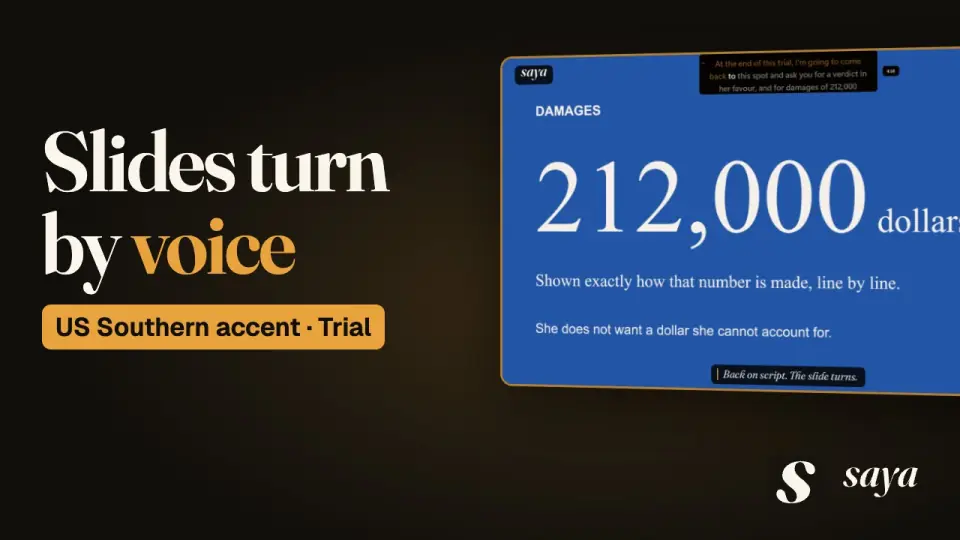 US Southern accent, with slides“Two Documents That Do Not Match” · 5:11
 US Midwest accent, with slides“The Phone Is My Phone” · 4:22
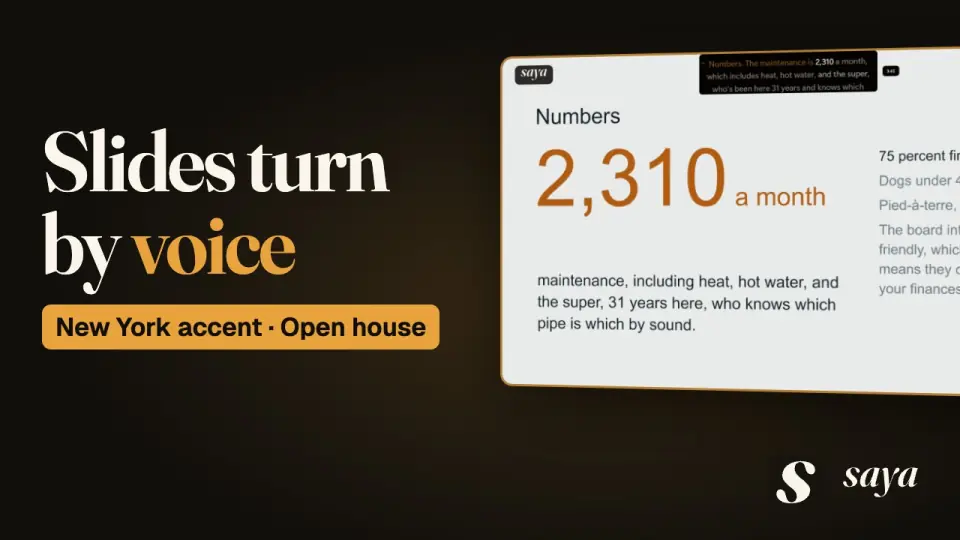 New York accent, with slides“A Closet with Ambition” · 5:06
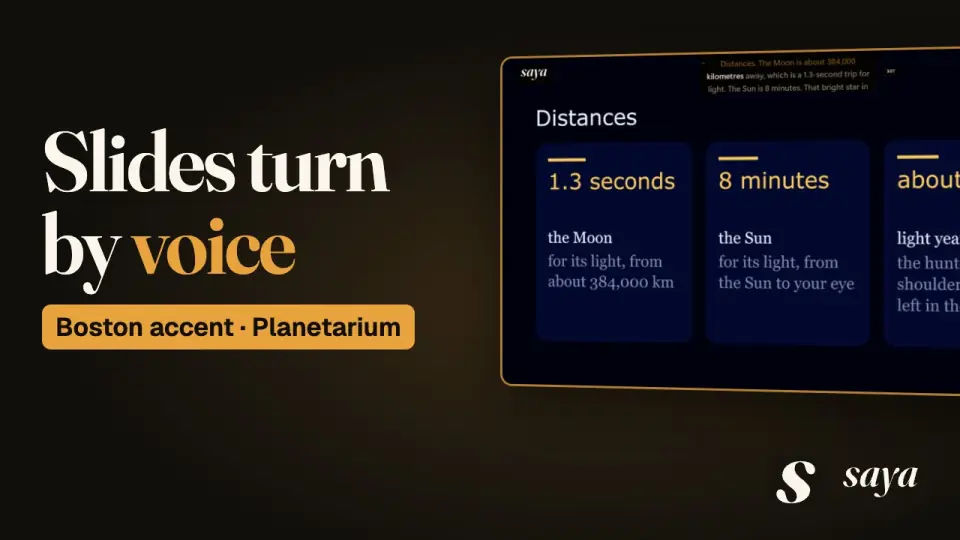 Boston accent, with slides“Nobody Turned It Off” · 4:56
 African American accent, with slides“Expand, Backfill, Switch, Contract” · 5:41
 Scouse accent, with slides“A Roof and a Tuesday” · 4:38