Slides That Follow Your Voice: Boston Accent Planetarium Show
A planetarium presenter shows the sky over the city with every light turned off, about 2,500 stars against the 40 you get at home. SAYA shows the slides full screen and turns them as the talk reaches them. Along the way the voice goes off script, corrects itself, restarts a sentence, pauses and skips a line.
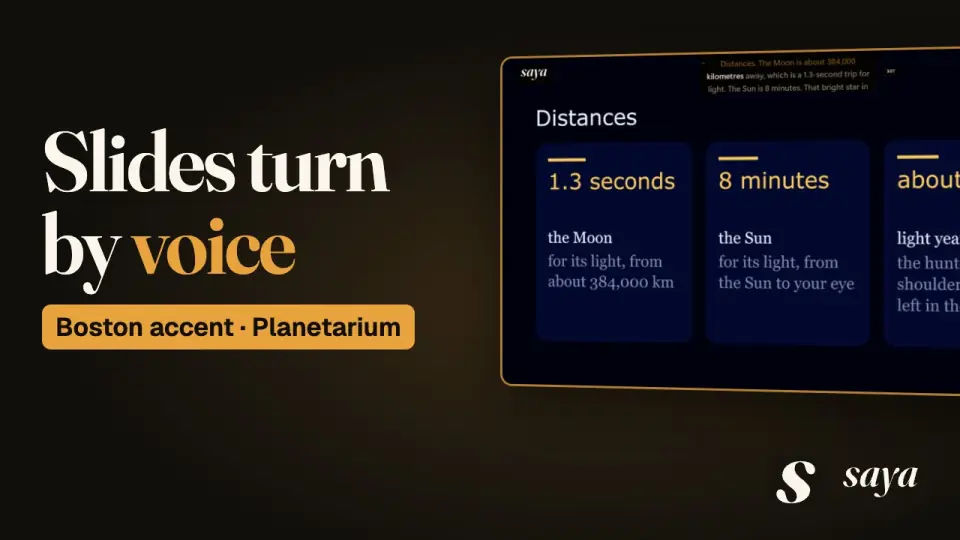
“Nobody Turned It Off”, a scripted demo talk with slides on SAYA for Windows on a remote test server, in one take from start to finish, with opening and closing titles added. SAYA turns the slides as the talk reaches them. The voice reached SAYA through a virtual audio cable, not a room microphone. The accent name is the voice library's label.
Moments to watch
Select a time to play from there. A “…” marks where a quote starts or stops mid-sentence.
Off script0:47
No? All right. Somebody will need it. Somebody always does.
A pause0:53
Give your eyes about a minute. What you're looking at now is the sky over this city tonight, at about nine o'clock, with every light in the city turned off. You've …
A slip and a fix1:46
It's the forty-seventh, no, forty-eighth brightest.
Said another way2:47
A planet shows a little disc instead of a point, so all that flicker gets averaged away. So if you see something bright and steady, low in the sky, it's probably a planet, and tonight that's the one …
A skipped part4:31
We just turned the other lights on.
Transcript
The words of the talk as the voice says them, including its asides and slips. The text on screen is the script. While the film plays, the current paragraph is marked.
Slide 1: Nobody turned it off
0:17Good evening, and welcome to the dome. Before we turn the lights down, three things. One, the seats recline, and they recline more than you think, so lean back slowly. Two, if you need to leave, the exits are the glowing green signs, and you won't offend the universe. [chuckles] Three, if you have a question, hold it till the end, unless it's urgent, and the only urgent question in a planetarium is where the bathroom is, and it's through the green sign on your left. No? All right. Somebody will need it. Somebody always does.
Slide 2: Three things before the lights go down
0:51All right. Lights down. Give your eyes about a minute.
0:58What you're looking at now is the sky over this city tonight, at about nine o'clock, with every light in the city turned off. You've never seen this. Nobody in this room has seen this from where they live, because the sky you get at home has maybe forty stars in it on a good night, and this one has about uh, twenty-five hundred, which is roughly what the human eye can pick out with no help, from a dark place, in one half of the sky.
Slide 3: 40 stars vs about 2,500
1:27So let me find you something. Look for the big dipper, up there, the saucepan. Follow the two stars at the end of the pan, up, about five times the distance between them, and you land on a star that isn't very bright, and that's Polaris, the north star. It's not the brightest star in the sky. It's the forty-seventh, no, forty-eighth brightest.
Slide 4: Finding Polaris
1:50It's famous for sitting still, because the Earth's axis points almost exactly at it, so everything else turns around it like a wheel around a what's the word... a... uh... hub, and if you stood here all night, which you may not, you'd see that happen. Somebody in row three just asked their dad if we can stay all night. We can't. I've asked. The museum has a policy, and the policy was written after a night I was involved in, in two thousand and twelve, and that's all I'll say about that. Where was I. Twinkling.
2:26Now, a word about twinkling. Stars twinkle. Planets mostly don't. That's not because of the star, it's because of the air.
Slide 5: Twinkling
2:36Starlight arrives as a point, so thin that when it passes through the moving layers of our atmosphere it gets bent a little, this way and that, and your eye sees it shimmer. A planet shows a little disc instead of a point, so all that flicker gets averaged away.
2:53So if you see something bright and steady, low in the sky, it's probably a planet, and tonight that's the one right there, which is six hundred million kilometres away and reflecting sunlight at you like a very patient mirror.
3:08Distance, distances, all right. Distances. The Moon is about three hundred and eighty-four thousand kilometres away, which is a one point three second trip for light. The Sun is eight minutes.
Slide 6: Distances
3:22That bright star in the shoulder of the hunter, over there, is about six hundred and forty light years away, which means the light hitting your eye right now left it in the thirteen eighties, before anyone in this building's family had a surname they'd recognise. If that star went out tonight, we wouldn't know for six centuries. I find that calming. Other people find it alarming. Both are fine.
3:48My daughter, who's nine, finds it alarming. She has me check on that star every night. I do. It's still there. I report back. It's a good system. I was going to say something about what that's taught me, but, it's a good system, let's leave it there.
4:05One more thing before I bring the lights up. The faint band running across the top of the dome, the smudge, like someone wiped the sky with a damp cloth, is our own galaxy, seen from the inside, from a small planet about two-thirds of the way out, uh, looking back toward the middle. Every star you've seen tonight is inside that band. You're inside that band, You're inside that band.
Slide 7: The smudge across the top of the dome
4:31We just turned the other lights on. [sighs]
4:38Lights up slowly. Questions, and then the bathroom, in that order. Row three. Yes. You. Go ahead. [laughs]
More demo films
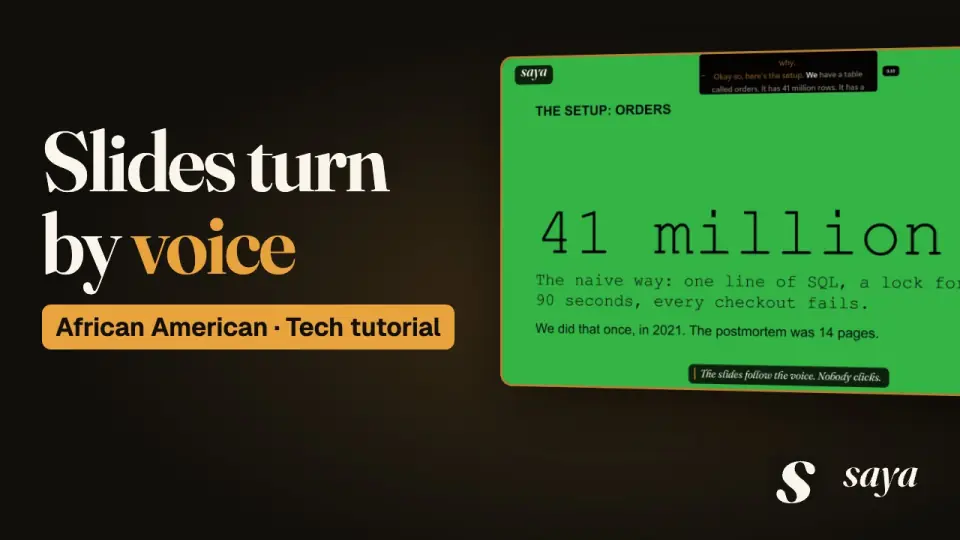 African American accent, with slides“Expand, Backfill, Switch, Contract” · 5:41
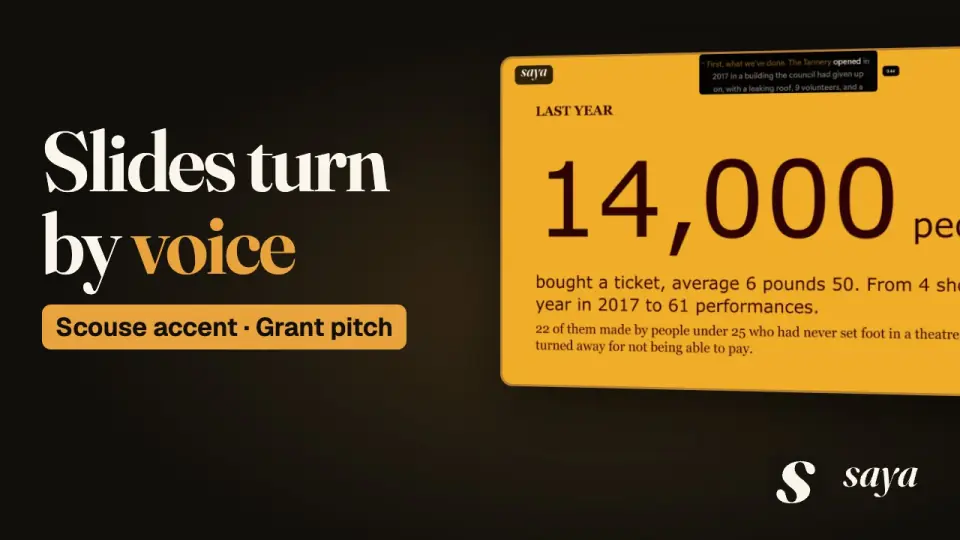 Scouse accent, with slides“A Roof and a Tuesday” · 4:38
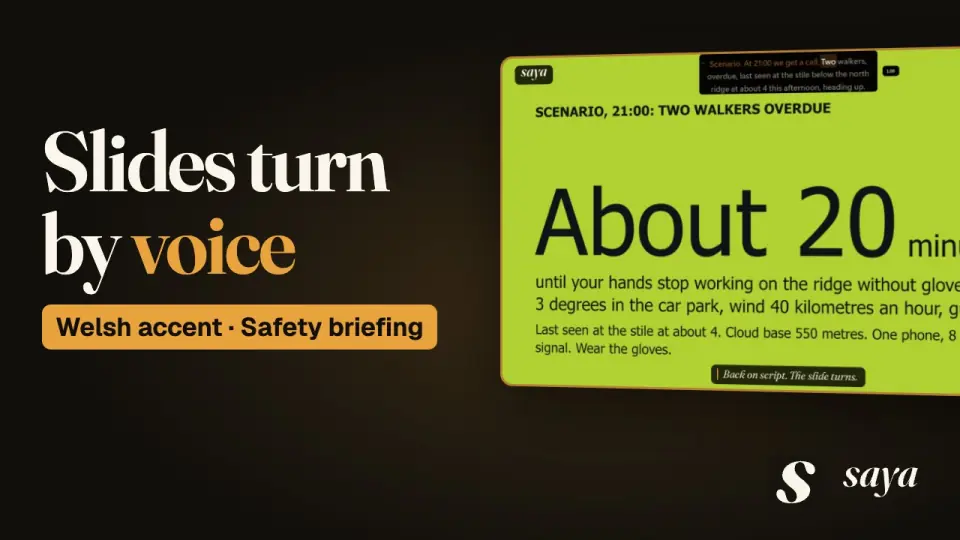 Welsh accent, with slides“Not in the Van” · 4:54
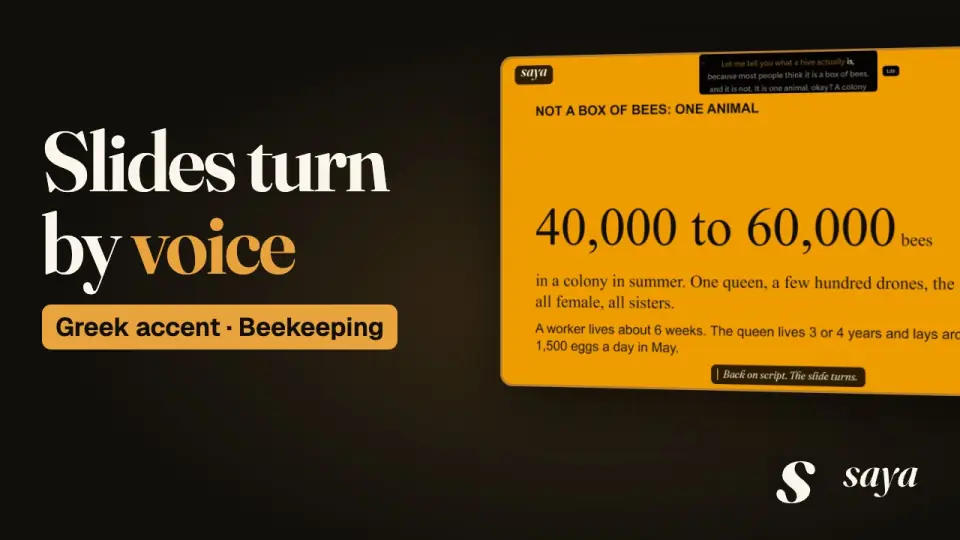 Greek accent, with slides“One Warm Animal” · 5:20
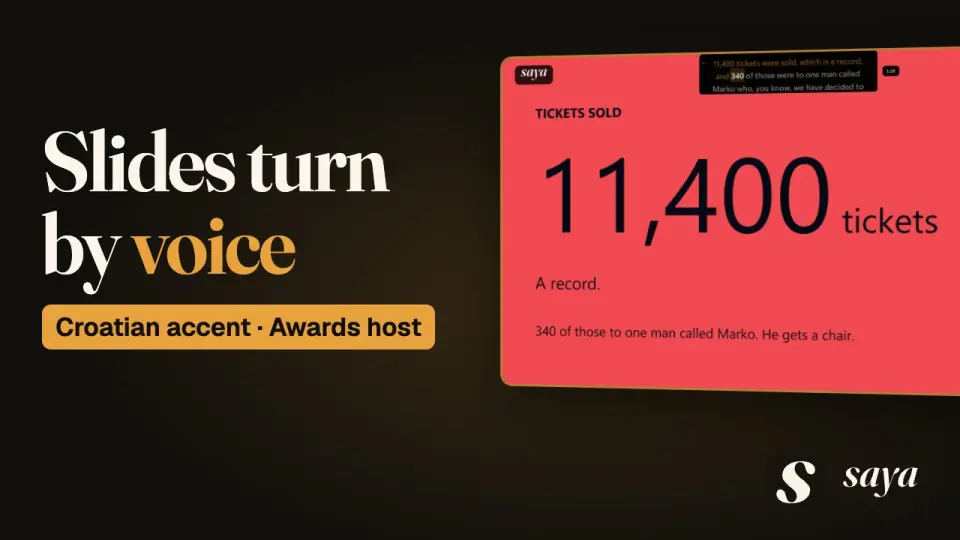 Croatian accent, with slides“The Stairs on the Left Are Easier” · 4:50
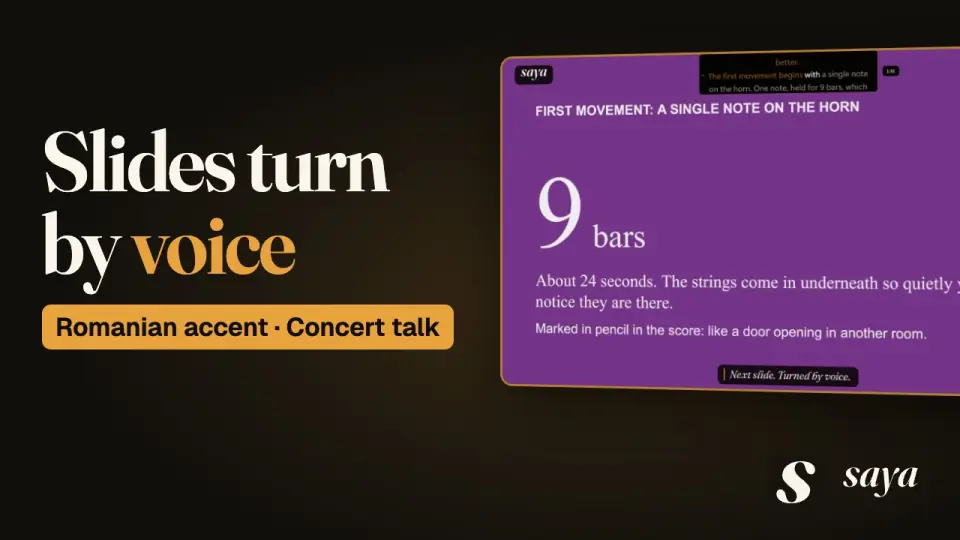 Romanian accent, with slides“One Note, Held for Nine Bars” · 4:30