Slides That Follow Your Voice: Korean Accent Medical Explainer
An audiologist walks patients through a hearing test, which is painless and takes about 40 minutes: a short talk, a look in the ears with a small light, tones from 250 to 8,000 hertz in a quiet booth, a small vibrator on the bone, and words in quiet and in noise. SAYA shows the slides full screen and turns them as the talk reaches them. Along the way the voice goes off script, corrects itself, restarts a sentence, pauses and skips a line.
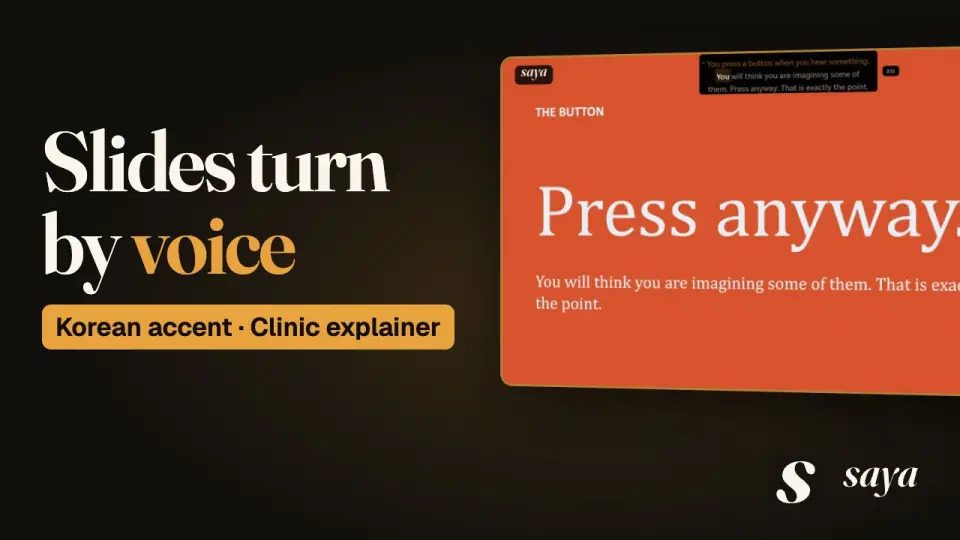
“Press Anyway”, a scripted demo talk with slides on SAYA for Windows on a remote test server, in one take from start to finish, with opening and closing titles added. SAYA turns the slides as the talk reaches them. The voice reached SAYA through a virtual audio cable, not a room microphone. The accent name is the voice library's label.
Moments to watch
Select a time to play from there. A “…” marks where a quote starts or stops mid-sentence.
Off script1:17
Twelve is an average. Some weeks it is one in ten.
A false start1:32
It is a small, quiet room with a heavy door, and it is quiet so that we are measuring your hearing and not the traffic. You will have, you will wear, sorry. You will wear headphones, and I …
A slip and a fix1:43
You will wear headphones, and I will play tones, one at a time, at different pitches, from a low two hundred and fifty hertz, which is roughly the hum of a refrigerator, up to eight hundred, sorry, eight …
A pause2:21
That is exactly the point, is exactly the point. We then repeat the quietest sounds with a small vibrator behind your ear, on the bone.
Said another way2:49
And if the two match, the change is in the inner ear or the nerve, which is the pattern we see most with age and with noise. The last part is speech.
Transcript
The words of the talk as the voice says them, including its asides and slips. The text on screen is the script. While the film plays, the current paragraph is marked.
Slide 1: What happens in a hearing test
0:17Hello. I am an audiologist, which is a word most people meet for the first time on the day of their appointment, usually in a corridor, usually a little worried. [chuckles] So let me use these few minutes to walk you through exactly what will happen in a hearing test, because the test is uh, painless, it takes about forty minutes, and the thing most people are nervous about is just not knowing.
0:43First, we talk. I will ask when you first noticed a change, whether it is one ear or both, whether you hear ringing, and which situations are hardest. Almost everyone says restaurants. That is not a coincidence, and I will come back to it.
Slide 3: The look: about 1 in 12
1:02Then I look in your ears with a small light. I am checking the ear canal and the eardrum, and about one in twelve people I see has enough wax to change the result, which is good news, because it is the easiest thing in this building to fix. Twelve is an average. Some weeks it is one in ten. I will not show you a picture. You are welcome. No? Okay. A good picture, actually, that one. Anyway.
Slide 4: The booth: 250 to 8,000 hertz
1:30Then the booth. It is a small, quiet room with a heavy door, and it is quiet so that we are measuring your hearing and not the traffic.
1:40You will have, you will wear, sorry. You will wear headphones, and I will play tones, one at a time, at different pitches, from a low two hundred and fifty hertz, which is roughly the hum of a refrigerator, up to eight hundred, sorry, eight thousand hertz, which is the hiss in the letter s.
2:00For each pitch I make the tone quieter and quieter until you can barely hear it, and then I come back up, and the quietest level you respond to about half the time is your threshold at that pitch. You press a button when you hear something. You will think you are imagining some of them. Press anyway. That is exactly the point, is exactly the point.
Slide 5: Press anyway.
2:27We then repeat the quietest sounds with a small vibrator behind your ear, on the bone. This sends the sound straight to the inner ear, um... bypassing the eardrum and the three small bones in the middle ear.
Slide 6: Headphones against bone
2:41If you hear better through the bone than through the headphones, the problem is in the middle ear, and is often treatable. And if the two match, the change is in the inner ear or the nerve, which is the pattern we see most with age and with noise.
Slide 7: The restaurant, explained: 30 or 40 percent
2:58The last part is speech. I will say words, in quiet and then with a background of other voices, and you repeat them. This is the part that explains the restaurant.
3:10Many people have thresholds that look only mildly changed on the chart, but lose thirty or forty percent of words once there is noise around them, because the high pitches that separate words like fit and sit and hit are the first to go, and noise covers exactly those. [sighs] My father has exactly this chart. He hears everything I say in the kitchen and nothing I say in a restaurant, and for years he said the restaurants had got louder. They had, a little. So had his chart. He sits with his back to the wall now. He says it is for the view. Okay.
3:51Your result is drawn on a chart called an audiogram. Pitch goes left to right, loudness goes top to bottom, and the normal range is a band near the top, from about zero to twenty decibels. Each ear gets its own line.
Slide 8: Your result: an audiogram
4:08Two practical things. Please do not come straight from a concert or a building site, since a loud few hours can shift your thresholds for a day. Sorry, the camera, Jisoo is telling me there are three things on the card. There are two. I wrote the card. Two. And if you can, bring someone whose voice you struggle with, because when I ask which situations are hardest, the honest answer is often sitting in the waiting room. [laughs] I have had couples come in together and leave in a slightly different mood, usually because the test showed one of them was right. I do not take sides. I hand out the chart.
Slide 9: Two practical things
4:49That is the whole test. Forty minutes, a small booth, a button, and an answer. See you soon.
More demo films
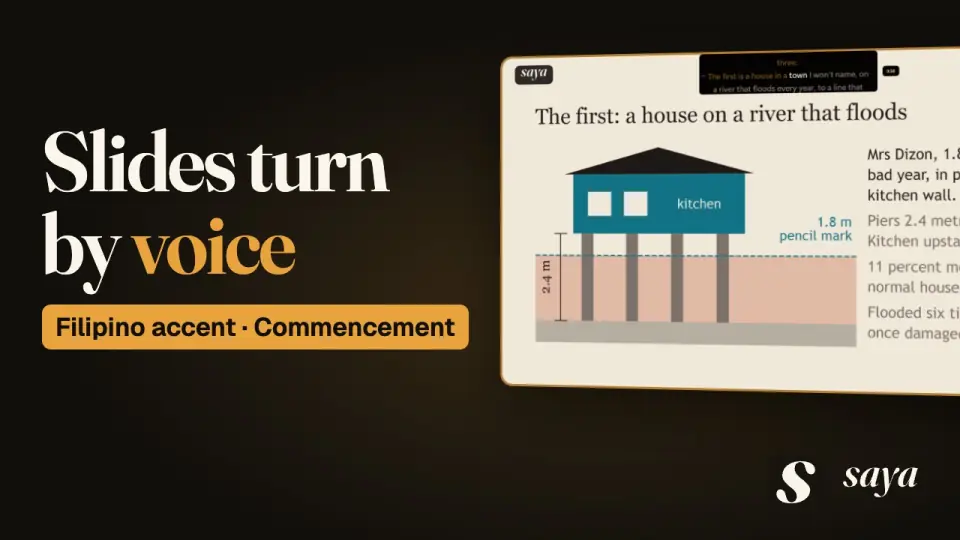 Filipino accent, with slides“Listen to the Pencil Marks” · 5:45
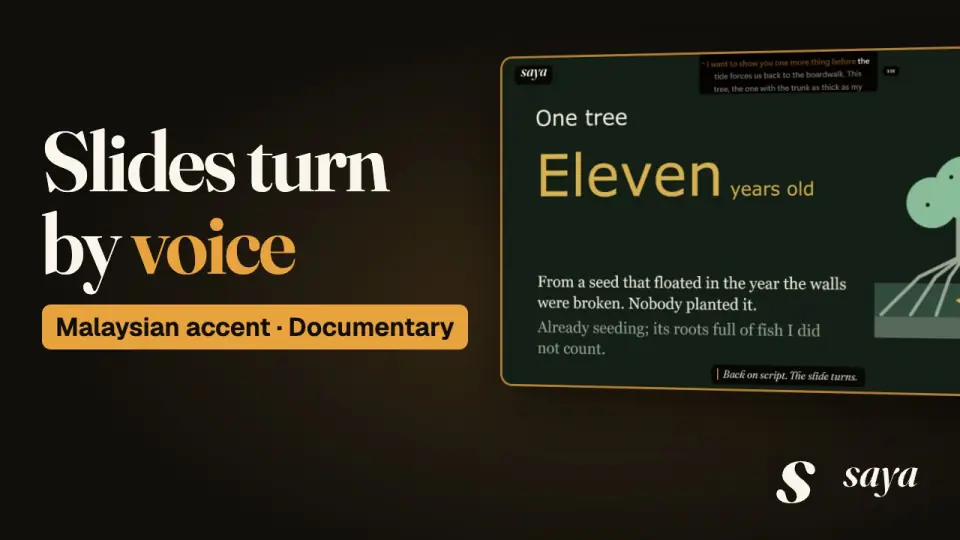 Malaysian accent, with slides“A Forest Allowed to Remember” · 5:00
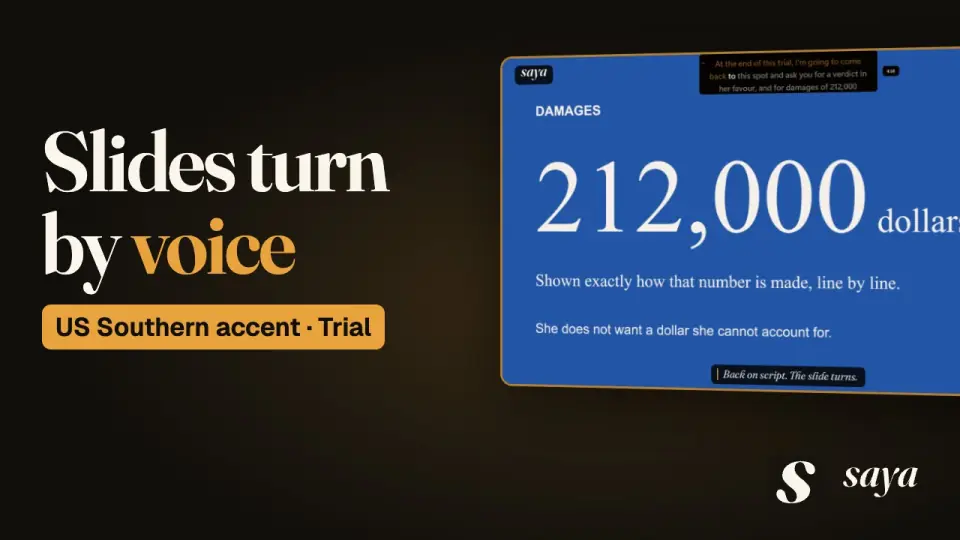 US Southern accent, with slides“Two Documents That Do Not Match” · 5:11
 US Midwest accent, with slides“The Phone Is My Phone” · 4:22
 New York accent, with slides“A Closet with Ambition” · 5:06
 Boston accent, with slides“Nobody Turned It Off” · 4:56