Slides That Follow Your Voice: Ghanaian Accent Panel Moderator
She opens a session on cold storage between the farm and the market, where about a third of the country's tomatoes go to die. SAYA shows the slides full screen and turns them as the talk reaches them. Along the way the voice goes off script, corrects itself, restarts a sentence, pauses and skips a line.
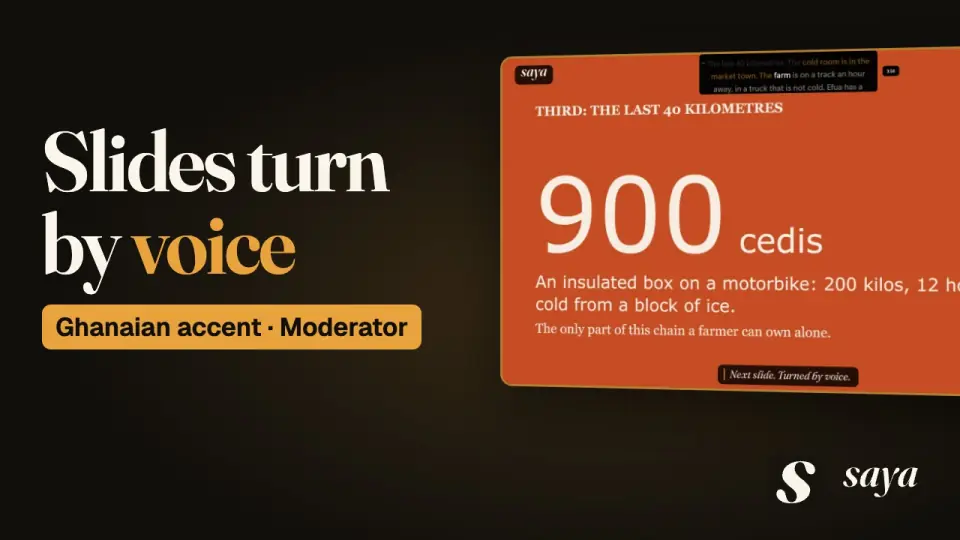
“A Refrigerator Missing in Between”, a scripted demo talk with slides on SAYA for Windows on a remote test server, in one take from start to finish, with opening and closing titles added. SAYA turns the slides as the talk reaches them. The voice reached SAYA through a virtual audio cable, not a room microphone. The accent name is the voice library's label.
Moments to watch
Select a time to play from there. A “…” marks where a quote starts or stops mid-sentence.
A slip and a fix0:53
A tomato farmer in the north harvests in the dry season, when everybody harvests, and the price at the farm gate falls to about thirty, no, forty pesewas a kilo, which is below the cost of the crate it travels in.
A pause1:41
Everything else is how. Our panel.
Off script2:02
He is already shaking his head. Good. Save it, Yaw, you have eight minutes. Sorry, I have lost the card. Efua. Yes.
Said another way3:44
But eleven hundred farmers with no bank account between them cannot borrow a hundred and eighty thousand cedis, so Kofi will tell us what a bank has to see first. Third, and this is the one I care about.
A skipped part5:02
Tell us what cold chain means to a man with a crate.
Transcript
The words of the talk as the voice says them, including its asides and slips. The text on screen is the script. While the film plays, the current paragraph is marked.
Slide 1: Cold Storage Between the Farm and the Market
0:17Good afternoon, everybody, and welcome back from lunch, which I am told was good, and which I did not get, so if I am short with the panel, that is why. [chuckles]
0:29My name is Akosua. I will be moderating this session, which is called Cold Storage Between the Farm and the Market, because the gap between the farm and the market is where about a third of the tomatoes in this country go to uh, die.
Slide 2: 40 pesewas at the farm, 4 cedis in the city
0:46Let me put the problem on the table before I introduce the panel, so that they can argue with me instead of with each other. A tomato farmer in the north harvests in the dry season, when everybody harvests, and the price at the farm gate falls to about thirty, no, forty pesewas a kilo, which is below the cost of the crate it travels in. Six weeks later the same tomato, if it had survived, would sell in the city for four cedis. It does not survive. It travels six hundred kilometres in an open truck, in thirty-four degrees, for two days, and by the time it arrives, between thirty and forty percent of the load is juice.
1:30The farmer is poor in March and the city is hungry in May, and there is a refrigerator missing in between. That is the whole session, actually. Everything else is how.
Slide 3: Poor in March, hungry in May
1:45Our panel. On my left, Yaw, who runs a cooperative of eleven hundred farmers near Techiman and who has, I am told, strong views on the word cold chain, which he thinks is a word for people with trucks. [laughs] He is already shaking his head. Good. Save it, Yaw, you have eight minutes. Sorry, I have lost the card. Efua. Yes. Next to him, Efua, who is an engineer and who has built fourteen solar cold rooms in market towns over the last six years, and who will tell you what broke, because she promised me she would. And on my right, Kofi, from the development bank, who has the money, and who has been very patient while I described his job as having the money. No? Kofi is not laughing. Kofi, I am joking. Mostly.
Slide 4: The panel
2:41Three questions I will put to them, and then you. First, the room itself. A twenty-tonne solar cold room costs about one hundred and eighty thousand cedis to build, and Efua tells me the panels are now a third of that, down from half in twenty nineteen. A quarter, she is telling me. A quarter now. Even better. Does it pay?
Slide 5: First: does the room pay?
3:06Her numbers say a room in a busy market pays back in about four years. Yaw's numbers, from his cooperative, say seven, because the room is standing empty from July to September. I would like them to argue about that in front of you.
3:23Second, the owner, second, who... Second, who owns it. A cold room owned by a cooperative gets used. A cold room owned by a donor gets photographed. I am quoting Yaw, from the corridor this morning, and he is nodding, so I am allowed. [chuckles]
Slide 6: Second: who owns it
3:44But eleven hundred farmers with no bank account between them cannot borrow a hundred and eighty thousand cedis, so Kofi will tell us what a bank has to see first.
3:55Third, and this is the one I care about. The last forty kilometres. The cold room is in the market town. The farm is on a track an hour away, in a truck that is not cold.
Slide 7: 900 cedis: the last 40 kilometres
4:09Efua has a small insulated box that goes on a motorbike, two hundred kilos, twelve hours of cold from a block of ice, and it costs nine hundred cedis, and I want to know whether that box, and not the room, is the real answer, because it is the only part of this chain a farmer can own alone, a farmer can own alone. [sighs] I have seen that box. It was on the back of a motorbike outside my mother's house, you see, because her neighbour's son uses one, and I stood in the road and asked him questions for twenty minutes, and he was very polite, and he was also late for the market because of me. So. I owe that boy some tomatoes. Anyway.
4:55Panel, you have eight minutes each, and I will be strict, because I missed lunch. Tell us what cold chain means to a man with a crate.
More demo films
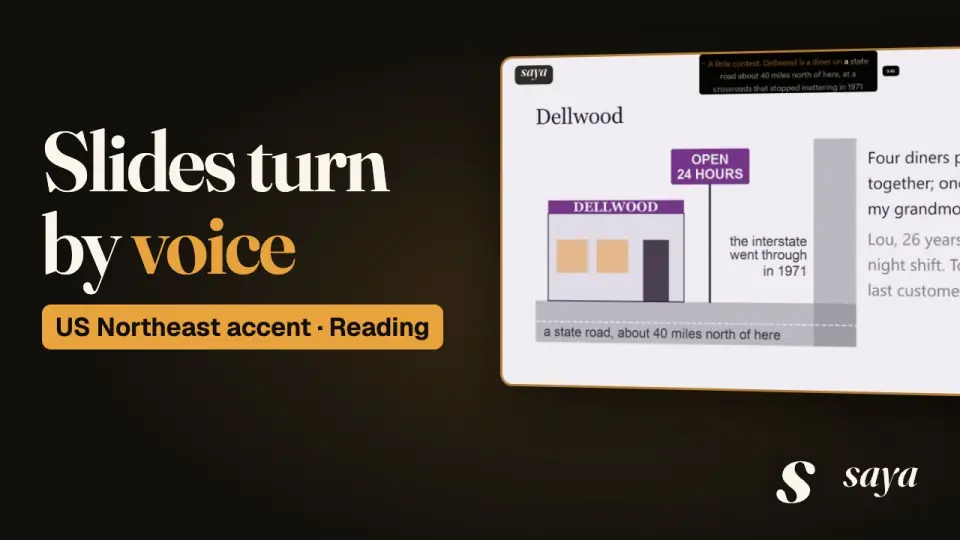 US Northeast accent, with slides“The Rest Is the Minute” · 4:37
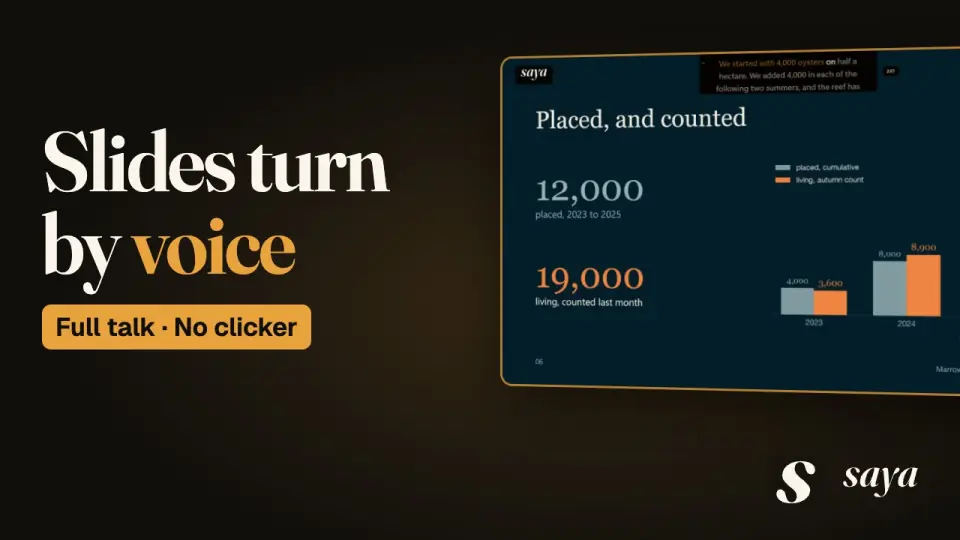 British accent, with slides“What Twelve Thousand Oysters Did” · 5:04
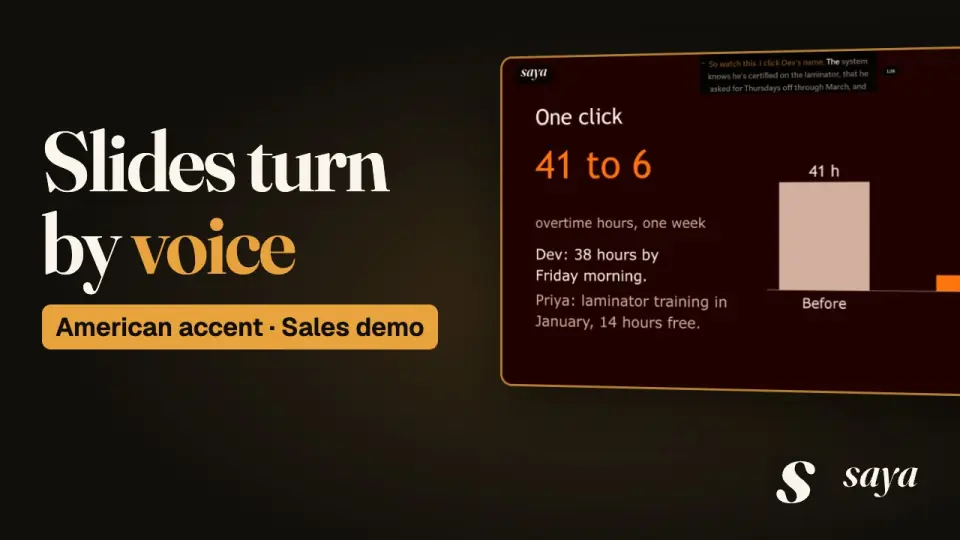 American accent, with slides“Two Stores, Thirty Days” · 4:53
 South African accent, with slides“Clean Water In, Honest Numbers Out” · 5:34
 New Zealand accent, with slides“It Was There the Whole Time” · 4:48
 Dutch accent, with slides“A Lake That Did Nothing for Forty Years” · 5:08